The judging at the Standard Bank Chenin Blanc Top 10 Challenge 2025 was conducted according to strict, audited tasting protocols that detail both the logistics and tasting procedures, as in previous years. Auditors were from LDP in Stellenbosch. This ensures not only good governance but also consistency, guaranteeing that the same procedures are followed each year, even though the panel of judges is rotated regularly.
Two significant changes were introduced this year to the judging process. Wines were scored out of a possible 100 points. This was done to align more closely with international standards, as well as to allow for a wider scoring range, thereby providing more nuance in the panel averages.


We also identified a Top 20 shortlist this year, acknowledging the high standard of entries and recognising more wines, thereby building anticipation for the winners right up to the announcement at the rewards lunch.
This year’s judging panel comprised five judges and one associate. The associate’s scores were not considered in the results, but they did contribute to the discussion in a learning capacity, often adding valuable insights. The associate judging position is crucial in guiding and mentoring up-and-coming young judges, providing them with opportunities to gain experience.
Panel members were:
Higgo Jacobs (Chair – Sommelier and industry expert)
Ginette de Fleuriot CWM (Judge – Wine Training Manager, Vinimark)
Rob Gower (Judge – Wine Category Manager, Spar South Africa)
Noncgebo Langa (Judge – Winemaker, Delheim Estate)
Shawn Mathyse (Judge – Winemaker, Ken Forrester Wines)
Shane Mumba (Associate – Sommelier Nocturne Bar & Restaurant)

The wines were tasted blind and randomly with no indication of vintage, cellar treatment or technical analysis by the six-person panel. When relevant, vintage and analysis (mostly RS or ABV) details were requested during panel discussions. Panellists judged wines in a different sequence to give the entries as fair a chance as possible in the lineup (flights).
Healthy discussions were allowed around wines with notable score discrepancies among panellists. Judges were encouraged to consider contrasting points of view, but were not pressured to change their scores.
If any member suspected bottle faults of the panel, another bottle was called for. Faults (especially TCA) were once again relatively uncommon, which is a positive development. This is indicative of the increase in use of closures under screw caps, composites, and, of course, improvements in cork closure technology.
A strong and competitive 133 (up from 127) entries from 79 producers across 28 different WO’s were considered for the first round of judging. This number was narrowed down, over two days of diligent tasting, to 29 potential wines tasted for a second time (from fresh bottles) on the final (3rd) day. This year’s Top 20 and Top 10 were selected from this final flight of The Top 20 wines scored above 89.8/100 average; and this year’s Top 10 winners all scored above 91.4.
New scores were assigned to wines in the final round of judging, and the Top 20 and Top 10 wines were clearly distinguished from panel averages, showing the benefit of the 100-point system.

Key findings and commentary
With a high number of old vines in plantings across a diverse range of sites all over the Cape, Chenin remains SA’s calling card for unique, authentic, world-class white wines. A cross-section of quality in this challenge shows remarkable diversity in a category that is ever-growing in confidence. Entries from 28 (up from 22 last year) different Wine of Origin classifications indicate that not only is the variety planted across most of the Cape, but it also produces quality in various terroirs. Our winning 10 wines represent no fewer than seven WO’s, with a further four featured in the top 20.
It is this diversity in expression that is at once an exciting prospect for the exploring consumer, while also a challenge when defining the parameters of quality for an awards challenge. Due to the smorgasbord of tools and techniques available to winemakers, there is an incredible variety that shows in the canvas of flavours on offer.
We received 96 wooded and 37 unwooded entries this year (the latter up from 26 last year). Among the 10 winners are two unwooded expressions and two wines listed with combined élevage in amphora, cement, ceramic, old oak, etc., both an exciting prospect for the exploring consumer, and Panellist Rob Gower commented that there might be an opportunity to open up to other categories in their own challenges / top 10s. Sparkling, Value, Off-dry, etc, are all commercially viable considerations.

Even though the diversity of styles was identified and celebrated by the different palates on the panel, universal quality markers such as purity, varietal definition, intensity, and balance were rewarded.
The category is as strong as ever, with most entries warranting a second look, as they brought something additional to simple commercial appeal. However, we believe that we should not rest on our laurels. This year saw several pedestrian entries that were highly commercial in nature. Of course, the price point is a factor here, but one-dimensional, neutral wines should not be accepted, even at a low price point.
On a more positive note, and very significant, there is a decrease in obviously faulty wines every year. This includes both winemaking and bottle faults. We were sitting at around 3% of bottles questioned, which is very low for a technical tasting. Entries now comprise a majority in screwcap (54), followed by technical corks (46) and then natural corks (33).
Once again, winning wines’ concentration and intensity don’t resonate in oak and sweetness but rather in fruit intensity and length. There are fewer high RS, overtly toasty, or leesy, or botrytis character-influenced wines circulating than when this challenge began. This shape shift may be well-documented, but it remains a significant and impactful change.
‘Rich & ripe’ wooded expressions showed good integration of oak and fine lees work, with very few over-oaked wines. This style was welcomed by the panel as a legitimate expression of Chenin and judged on merit. There are still plenty of consumers who prefer this style of Chenin, and this was fully acknowledged and awarded by the panel.
However, the world’s best wines are those that express their terroirs best with purity and drive.
To quote co-panellist Ginette de Fleuriot: “Once again, I was completely taken by the exceptional quality and stylistic range of the wines entered. Wines with purity of fruit, freshness, elegance and space to showcase minerality. Then the more textured, oak-matured expressions showed more finesse than in years gone by – allowing better integration and support of fuller flavours. Collectively, they reaffirm South Africa’s reputation as a world leader in Chenin Blanc.”


And Rob Gower: “I saw a fantastic use of older oak supporting the wines in structure more than flavour. Very few wines were tasting bombs and I would comfortably drink more than one glass of all the winners. As a country, we can be extremely proud of Chenin Blanc; we have announced ourselves on the world stage with a unique style of wine that is eminently marketable.”
past, allowing for Reduction remains an interesting tool, and a recurring topic of panel discussion in judging Chenin. With the increasing adoption of natural farming and fermentation methods, this topic is more pertinent than ever. Tight, nervy, savoury wines that take time to unfold from the glass are no longer a rarity.
We can be extremely proud of Chenin Blanc; we have announced ourselves on the world stage with a unique style of wine that is eminently. Reduction can be intriguing and quite frankly fashionable, but careful consideration is required, and producers should be wary of unattractive mercaptans and bruised fruit characters that don’t blow off. An obvious stylistic (winemaking) impression, lacking sufficient fruit character to support it, can be monotonous and has become somewhat easier to spot.
This year’s Top 10 winners feature six under screwcap closures, two natural cork closures, and two composite cork closures.
A few wines were identified as having exotic floral and perfumed characters. This can be best allocated to varietals like Muscat or Viognier, which are used in small blending components. Understandably, this may charm some consumers, but when it is obvious, it is a detracting characteristic. The Top 20 wines are all 100% Chenin Blanc. This is significant.
Looking at the results, we received entries spanning the vintages of 2022, 2023, 2024, and 2025, with all 10 of the winning wines from the 2024 vintage, and just one wine from the top 20 from the 2023 vintage.
Retail price points of the Top 10 range between R100-R925, once again highlighting the incredible value that is on offer from SA Chenin as well as the ability for more simply produced, pure styles to compete with more ambitious, complex styles, most often as a result of old vines.
Seven of the Top 10 wines are from old vines, once again reinforcing the contribution to quality from older vineyards in Chenin Blanc.
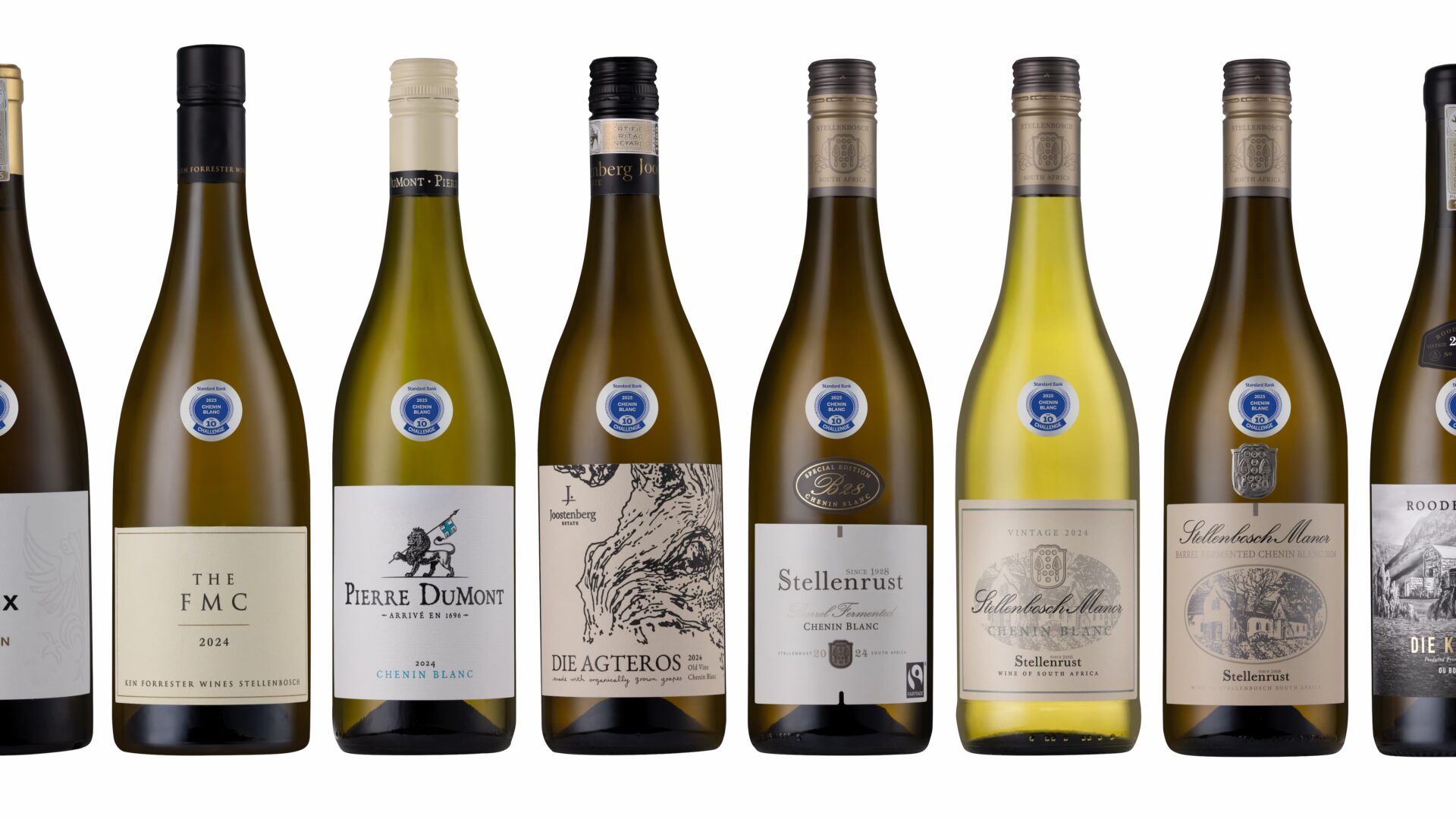
The Standard Bank Chenin Blanc Top 10 Challenge 2025 winners are (in alphabetical order):
• Alvi’s Drift 221 Chenin Blanc 2024
• Chamonix Old Vine Steen 2024
• Du Toitskloof Pierre Du Mont Chenin Blanc 2024
• Joostenberg Estate Die Agteros Chenin Blanc 2024
• Ken Forrester Wines The FMC 2024
• Roodekrantz Die Kliphuis 2024
• Stellenrust Stellenbosch Manor Barrel Fermented Chenin Blanc 2024
• Stellenrust Stellenbosch Manor Chenin Blanc 2024
• Stellenrust B28 Chenin Blanc 2024
• Stettyn Family Vineyards Shackleton Old Vines Chenin Blanc 2024
A tip of the hat to the incredible consistency in the top performers and return winners every year, especially considering the strict protocol and regular rotation of the panel. This year sees a healthy influx of many all-new winners, along with some return winners from previous challenges and one return (multiple) winner from last year. Once again, special mention befits Stellenrust, with another remarkable year of results, achieving six listings in the Top 20 from 10 entries, a very impressive strike rate indeed!
A heartfelt thank you to Standard Bank for promoting healthy competition and excellence in South Africa’s champion category – Chenin Blanc.